
 Jeff Daley Books
Serving During the Vietnam War
Advisory teams, local partnerships, and special operations in the jungles and highlands of Vietnam.
Special Forces entered Vietnam as advisers. Over time, their responsibilities expanded into village defense, reconnaissance, border surveillance, and some of the war’s most dangerous special operations. Small teams often worked far from major American bases, alongside local soldiers whose knowledge of the land was essential.
Names such as Nam Dong, A Shau, Lang Vei, Dak To, and Plei Me became associated with remote camps and fierce fighting. Behind those names were partnerships, difficult decisions, and men who depended on one another when help was distant.
From training missions to a lasting commitment
The Special Forces commitment began in 1957, when a ten-man detachment arrived to train South Vietnamese soldiers in Ranger skills. Subsequent mobile training teams helped develop a mission that increasingly centered on small advisory detachments rather than large American formations.1
Teams from the 1st and 7th Special Forces Groups rotated through Vietnam. Their task was to train, advise, and work alongside local forces. Weapons instruction was only part of the job: communications, medical skills, fieldcraft, and an understanding of local conditions all mattered.1
The Civilian Irregular Defense Group
The Civilian Irregular Defense Group, or CIDG, grew from village-defense efforts supported by the CIA and Special Forces. Its early development in the Central Highlands brought American advisers into close contact with indigenous communities, including the Rhade.2
“Montagnard,” a French term meaning mountain people, was a collective label for distinct highland peoples, not the name of a single tribe. Their circumstances, languages, and relationships with the South Vietnamese government differed. Other CIDG forces included Nung, Cambodian, and Vietnamese personnel.12
The program joined military training with local security. Defending a village meant protecting families and homes as well as resisting enemy activity. Trust could not be created by issuing weapons alone; advisers had to understand the people with whom they lived and worked.
The 5th Special Forces Group
The 5th Special Forces Group was already an established unit when its headquarters moved to Vietnam in 1964. From Nha Trang, it provided the organizational center for an expanding Special Forces commitment throughout South Vietnam.3
The work extended beyond patrols and camp defenses. Special Forces medical personnel treated civilians, and civic-action efforts supported community needs. These activities were part of the effort to build durable relationships in areas where security and daily life were inseparable.2
MACV-SOG and reconnaissance
Activated on January 24, 1964, the Military Assistance Command, Vietnam, Studies and Observations Group—MACV-SOG—was a joint special operations organization. It drew personnel from Army Special Forces, the Navy, Air Force, Marine Corps, and the CIA. It was distinct from the broader network of Special Forces advisory camps.4
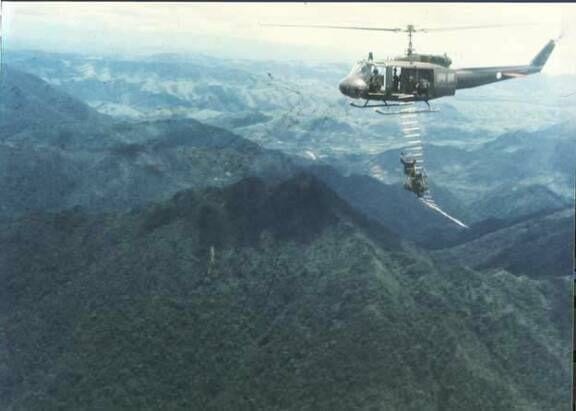
SOG missions included reconnaissance, personnel recovery, direct action, and other clandestine activities. Teams operated in South Vietnam and across its borders, including Laos and Cambodia. Intelligence about the Ho Chi Minh Trail was especially important because the route carried men and supplies toward the fighting in the south.4
Small reconnaissance teams combined Americans with indigenous personnel. Insertion was only the beginning. A team had to observe, communicate, avoid detection, and reach extraction. When discovered, it depended on supporting aircraft and reaction forces to survive.4
Special Forces also carried out reconnaissance through projects such as Delta, Sigma, and Omega. These names should not be treated as interchangeable with MACV-SOG: different organizations operated under different missions and command arrangements.
The Son Tay rescue attempt
On November 21, 1970, a joint force launched Operation Ivory Coast to rescue American prisoners believed held at Son Tay, near Hanoi. Army Special Forces and Air Force crews rehearsed extensively for a raid deep inside North Vietnam.5
The raiders reached the compound, but the prisoners had already been moved. No prisoners were rescued. The mission demonstrated the capabilities of a carefully trained joint force while also showing the decisive importance of current intelligence.5
Withdrawal and a continuing legacy
The colors of the 5th Special Forces Group returned to Fort Bragg on March 5, 1971. That milestone did not end every American special operations or advisory role in Southeast Asia. MACV-SOG itself was deactivated on April 30, 1972.34
Vietnam tested the central Special Forces idea: a small, skilled team could have an effect far beyond its size by working with others. It also revealed the cost of that commitment. The final chapter looks more closely at two examples—the actions of Roy Benavidez and the defense of Plei Me—where courage and mutual dependence became matters of survival.
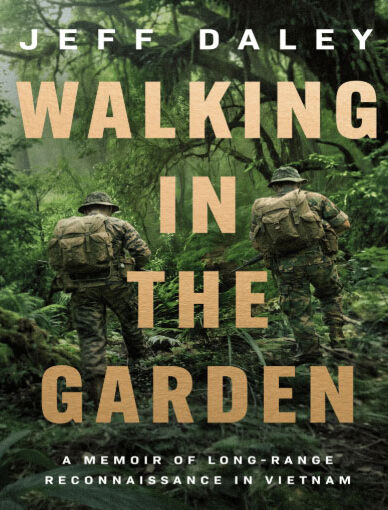
Walking in the Garden
Follow the history into a firsthand account of long-range reconnaissance in Vietnam’s Central Highlands, written by veteran Jeff Daley.
Explore the memoir Find a booksellerNext: Chapter 6 — Their Dangerous Missions
Source
References for Chapter 5.
- USASOC History Office, A Team Effort: Special Forces in Vietnam, June–December 1964.
- USASOC History Office, Civilian Irregular Defense Group: The First Years, 1961–1967.
- U.S. Army, 5th Special Forces Group (Airborne), unit history.
- USASOC History Office, MACV-SOG History.
- USASOC History Office, Operation Ivory Coast, a “Mission of Mercy.”
- Original article and extraction photograph: Jeff Daley, Special Forces Part 5.