
 Jeff Daley Books
The Army Rangers and Their Changing Mission
From colonial scouts to today’s 75th Ranger Regiment, with special attention to Vietnam’s long range reconnaissance patrol (LRRP) units, evolving training, and women’s service.
Chapters and article contents
- The meaning of Ranger
- Colonial beginnings and the frontier tradition
- World War Two establishes the modern model
- Korea and the survival of Ranger training
- Long range reconnaissance before Vietnam
- Vietnam patrols and the information they provided
- From reconnaissance to a wider range of missions
- Reconnaissance training and the 1969 Ranger redesignation
- From Vietnam companies to permanent battalions
- Grenada through Afghanistan and Iraq
- How Ranger training changed
- Women and the Ranger standard
American Ranger history follows a recurring military problem: how to develop soldiers who can operate beyond the immediate support of a larger force. Across different wars, that problem produced frontier scouts, assault battalions, reconnaissance patrols, and today’s permanently organized special operations regiment. These organizations share traditions, but they do not form one uninterrupted unit stretching back to colonial America.
Vietnam is central to this history. Its long range reconnaissance patrol (LRRP) units helped connect an older Ranger tradition to modern Ranger units. Understanding that connection also requires separating service in a Ranger organization from graduation from Ranger School. That distinction becomes especially important when examining women’s entry into Ranger training and their subsequent assignments.
Chapter 1The meaning of Ranger
Three uses of the name deserve attention. Historical Ranger units were organizations raised for particular campaigns. The modern 75th Ranger Regiment is an Army special operations formation. Ranger School is a leadership course whose graduates serve throughout the Army and other eligible services. [1]
The Ranger Tab recognizes graduation from the school. The regiment’s scroll identifies unit affiliation. A school graduate does not automatically become a member of the regiment, and a newly selected enlisted Ranger can join the regiment before attending Ranger School. Regimental assignment requires its own assessment and selection process. Training battalions that operate Ranger School are also separate from the regiment’s combat battalions. [1, 2]
Chapter 2Colonial beginnings and the frontier tradition
Colonial communities employed rangers to scout beyond settlements, gather information, and respond to attacks. Benjamin Church’s forces during King Philip’s War in 1675 combined colonial soldiers and Native American allies. Robert Rogers organized ranger companies in 1755 during the French and Indian War, serving the British rather than the future United States. [3]
Their operations drew heavily on knowledge of terrain, dispersed movement, and intelligence. Native Americans were participants and teachers in these methods as well as opponents. This history belongs within the violence of colonial expansion and warfare, rather than a simple story of European soldiers inventing wilderness fighting.
Rogers’ standing orders remain part of Ranger professional memory. Their influence is a matter of tradition and instruction; it does not establish continuous organizational descent from Rogers’ companies to today’s regiment. [3]
Chapter 3World War Two establishes the modern model
Major William O. Darby organized the 1st Ranger Battalion at Carrickfergus, Northern Ireland, on June 19, 1942. British commando training helped shape its selection and preparation. A small contingent participated in the Dieppe raid before the battalion fought in North Africa. Additional battalions expanded the Army’s capacity for specialized assault missions. [4]
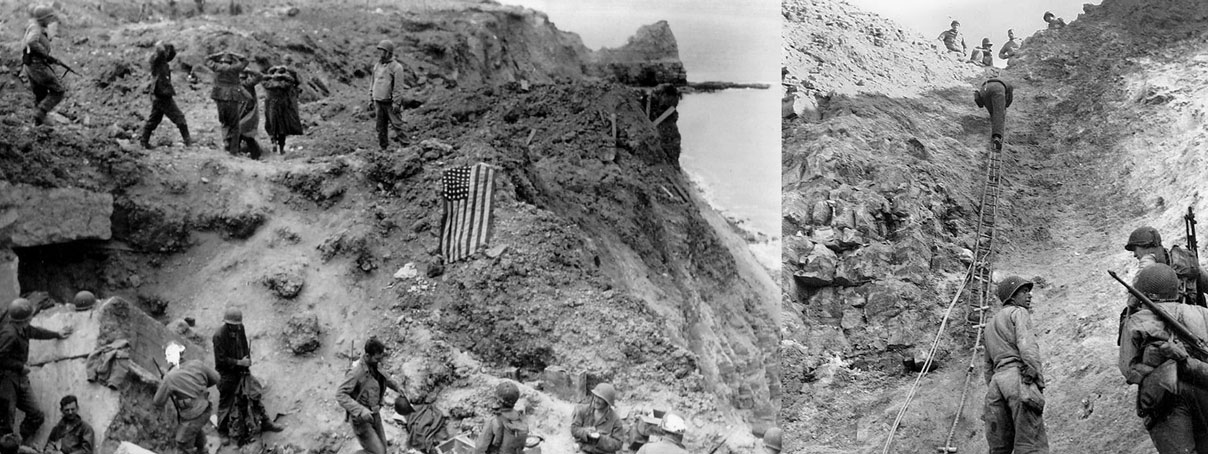
The war also exposed the cost of employing such forces. At Cisterna in Italy in January 1944, the 1st and 3rd Ranger Battalions suffered catastrophic losses. On D Day, the 2nd and 5th Ranger Battalions fought in Normandy; the cliff assault at Pointe du Hoc was undertaken by elements of the 2nd. These were demanding combat assignments, not evidence that specially selected infantry could overcome every tactical disadvantage. [5]
In the Pacific, the 6th Ranger Battalion, assisted by Alamo Scouts and Filipino guerrillas, helped rescue more than 500 prisoners at Cabanatuan in January 1945. Merrill’s Marauders operated separately in Burma as the 5307th Composite Unit. Their lineage, through the 475th Infantry, later became part of the 75th’s organizational inheritance. They should not be described as simply another of Darby’s Ranger battalions. [4, 6]
Chapter 4Korea and the survival of Ranger training
The Korean War brought Ranger companies back into combat. Organized on a smaller scale than the World War Two battalions, these companies undertook reconnaissance, raids, and other demanding infantry assignments in support of larger formations. [5]
The 2nd Ranger Infantry Company was an all Black airborne unit serving while the Army was moving toward integration. Its record includes the March 1951 airborne operation at Munsan ni. Its history deserves a place in the Ranger story alongside the better known European campaigns. [7]
The combat companies were inactivated, but the Army retained Ranger training. A Ranger Department was established at the Infantry School in 1951. The purpose broadened: graduates would return to ordinary Army units and improve small unit leadership throughout the force. The school’s survival explains why Ranger qualified soldiers existed even during periods without an active Ranger combat battalion. [8]
Chapter 5Long range reconnaissance before Vietnam
Long range reconnaissance patrols did not originate with the 1969 Ranger redesignation. Cold War Army units in Europe developed specialized patrol capabilities during the 1950s, preparing to observe enemy activity beyond friendly positions if war broke out. [9]
Vietnam created an urgent demand for similar skills in a different setting. Conventional formations needed reliable information about enemy movement, trails, installations, and concentrations in areas where maps, aircraft, and larger ground formations could not answer every question. Provisional reconnaissance detachments and platoons developed within divisions before more standardized long range patrol (LRP) companies appeared. Beginning in late 1967, LRP companies were attached to divisions and eventually separate brigades. [10]
Veterans continued using LRRP even as official unit names changed. LRRP and LRP describe a reconnaissance capability and its organizations, rather than proving that every soldier had attended Ranger School.
Chapter 6Vietnam patrols and the information they provided
The reconnaissance patrol’s principal value was the information it brought back or transmitted: where the enemy was, what it was doing, and what larger forces might encounter. Army organizational histories describe patrols operating in enemy held territory and reporting information or adjusting supporting fires. [10]
Patrol strengths varied. Five and six man teams were common, but four man patrols and larger teams also operated. Terrain and mission mattered more than a universal team size. The Mekong Delta imposed different movement and concealment problems from the Central Highlands. [10, 11, 12]
The work depended on observation, navigation, communications, endurance, and judgment. Small numbers could aid concealment while leaving little capacity to absorb casualties. Once detected, a patrol could face forces far larger than itself. Helicopter crews, artillery, medical evacuation personnel, and reaction forces were important parts of the system supporting those isolated teams.
The June 18, 1968 rescue associated with helicopter pilot Larry Taylor illustrates that vulnerability. A four man LRRP team was surrounded near Ap Go Cong. Taylor eventually carried the men out on his Cobra helicopter after conventional extraction had become untenable. His actions later received the Medal of Honor. [12]
Chapter 7From reconnaissance to a wider range of missions
Vietnam’s patrol units did more than observe. Their missions could include ambushes, locating enemy installations, assessing targets, and other combat tasks. The balance between reconnaissance and offensive action differed among commands and changed over time. [11]
The 9th Infantry Division provides a useful example. Its LRP and later Ranger teams operated in the Delta’s waterways, conducted reconnaissance and ambushes, and sometimes worked with other American and South Vietnamese forces. Their activities cannot be adequately described by applying a single jungle patrol model to every Vietnam unit. [11]
These organizations must also be distinguished from the Military Assistance Command, Vietnam (MACV), Studies and Observations Group (SOG), usually written MACV-SOG. SOG’s sensitive reconnaissance and other operations had a different command structure and operational scope. Army Special Forces, divisional LRRPs, Ranger companies, and South Vietnamese Rangers sometimes cooperated, but their names are not interchangeable. This distinction will matter when separate SOG articles are added to the History Channel. [28]
Chapter 8Reconnaissance training and the 1969 Ranger redesignation
The MACV Reconnaissance and Commando (Recondo) School opened at Nha Trang in September 1966. Operated by the 5th Special Forces Group, its demanding three week program prepared soldiers for reconnaissance and commando missions in Vietnam. It supplemented unit preparation and experience; attendance did not confer a Ranger Tab. [13, 14]
The school connected Special Forces instructional experience with the needs of reconnaissance units. Its field training included an operational reconnaissance patrol, exposing students to genuine wartime danger. That makes it different from a school exercise conducted against a simulated enemy. [14]
In 1969, existing LRP organizations were brought under the 75th Infantry’s Ranger identity. Two dates appear in official histories: January 1 for reorganization of the parent regiment under the Combat Arms Regimental System, and February 1 for company redesignations. They describe related administrative actions and should not be treated as necessarily contradictory. [9, 10]
For many serving soldiers, the change meant a new designation while their patrol work continued. The companies supported geographically separated higher headquarters; they were not a single battalion maneuvering together. The Army’s organizational history explicitly notes that the long range patrol mission continued through the redesignation. [10]
Chapter 9From Vietnam companies to permanent battalions
As American formations withdrew, their Ranger companies were progressively inactivated. The postwar Army then built a different structure: permanent, deployable Ranger battalions capable of operating as larger assault forces.
The 1st Battalion was activated on January 31, 1974, and assembled and trained before its July parachute arrival at Fort Stewart. The 2nd Battalion followed in 1974. A 3rd Battalion and regimental headquarters were established in 1984, and the 75th Ranger Regiment designation followed in 1986. These dates distinguish formal activation from later ceremonies and movements. [6, 15]
Vietnam’s reconnaissance experience contributed to the force’s heritage, but the new battalions were not merely enlarged LRRP companies. Their organization supported missions requiring concentrated infantry combat power as well as the endurance and initiative associated with small patrols.
Chapter 10Grenada through Afghanistan and Iraq
Rangers participated in preparations for the 1980 Iranian hostage rescue attempt. In Grenada in 1983, Ranger battalions conducted an airborne assault at Point Salines. In Panama in 1989, Rangers seized important airfields during Operation Just Cause. Elements also deployed for the 1991 Gulf War. [5, 15]
In Somalia, Rangers served in Task Force Ranger. The October 3 and 4, 1993 Battle of Mogadishu demonstrated the dangers of a raid becoming a prolonged urban battle involving multiple American organizations. Their participation should be described within that joint operation rather than attributing the entire mission to one unit. [5]
After September 11, 2001, the regiment became deeply involved in Afghanistan and Iraq. The October 2001 assault on Objective Rhino and March 2003 assault on Objective Serpent illustrate its airfield seizure capability. Repeated deployments also developed its experience in raids and operations alongside other special operations forces. [15]
The modern force combines infantry battalions with specialized support. A Regimental Special Troops Battalion was activated in 2006. The Military Intelligence Battalion began provisionally in 2017 and became permanent on June 16, 2020. Its capabilities include intelligence analysis, surveillance, unmanned aircraft, cyber, and electronic warfare. The reconnaissance requirement survives within a much broader organization. [15, 16]
Chapter 11How Ranger training changed
Ranger training now has three distinct purposes. Ranger School evaluates small unit leadership under stress. The Ranger Assessment and Selection Program (RASP) selects and prepares personnel for the 75th Ranger Regiment. Unit training then sustains and develops the skills required for operational missions. Passing one does not substitute for all the others. [1, 2]
The school grew from Korean War training and repeatedly changed its duration and curriculum. A desert phase was added during the 1980s and removed in the 1990s. The Army’s 2026 description identifies a 62 day course with Darby, Mountain, and Swamp phases. Graded leadership, field performance, and peer evaluations remain central. Recycling a phase can substantially extend a student’s time. [2, 17]
Changes also followed tragedy. Four students died during Florida swamp training in February 1995. Subsequent Army corrective actions and reviews by the Government Accountability Office (GAO), then named the General Accounting Office, addressed staffing, safety oversight, environmental monitoring, and evacuation procedures. Demanding training and responsible risk management both belong in the course’s history. [18]
In June 2025, the school introduced the Ranger Combat Fitness Assessment (RCFA) in place of its legacy entry assessment. A May 2026 Army account describes a continuous functional circuit involving running, obstacles, carries, and other tasks intended to assess durability. Older webpages still display superseded requirements, so their figures should not be presented as current without checking. [19]
The Ranger Creed
The Ranger Creed expresses the standards of conduct, responsibility, and commitment associated with Ranger service. The opening letters of its six stanzas spell RANGER.
Recognizing that I volunteered as a Ranger, fully knowing the hazards of my chosen profession, I will always endeavor to uphold the prestige, honor, and high esprit de corps of the Rangers.
Acknowledging the fact that a Ranger is a more elite Soldier who arrives at the cutting edge of battle by land, sea, or air, I accept the fact that as a Ranger my country expects me to move further, faster and fight harder than any other Soldier.
Never shall I fail my comrades. I will always keep myself mentally alert, physically strong and morally straight and I will shoulder more than my share of the task whatever it may be, one-hundred-percent and then some.
Gallantly will I show the world that I am a specially selected and well-trained Soldier. My courtesy to superior officers, neatness of dress and care of equipment shall set the example for others to follow.
Energetically will I meet the enemies of my country. I shall defeat them on the field of battle for I am better trained and will fight with all my might. Surrender is not a Ranger word. I will never leave a fallen comrade to fall into the hands of the enemy and under no circumstances will I ever embarrass my country.
Readily will I display the intestinal fortitude required to fight on to the Ranger objective and complete the mission though I be the lone survivor.
Rangers lead the way!
United States Army, Ranger Creed. [33]
Chapter 12Women and the Ranger standard
Kristen Griest and Shaye Haver became the first women to graduate from Ranger School on August 21, 2015. Lisa Jaster became the third that October and the first woman Army Reserve graduate. These achievements initially concerned access to the school; they did not automatically establish service in the 75th Ranger Regiment. [20, 21]
The broader policy followed in December 2015, when Defense Secretary Ash Carter directed that combat occupations open to qualified women without exceptions. The Army opened its remaining closed specialties in April 2016. School admission, occupational eligibility, and selection for a particular unit were distinct steps. [27]
The controversy included concerns about physical demands, injury, selection fairness, and whether pressure for successful integration affected standards. Those are separate questions. A documented change in eligibility does not itself prove that performance requirements were lowered. Equally, an official assurance is not a substitute for independently examining a particular allegation.
The Army stated that the women met the same graduation standards. Its reporting also records that Griest and Haver recycled Darby twice and then received a Day One restart. A male graduate described recycling alongside them. A fair account includes these details while avoiding unsupported claims that recycling itself established favoritism or that all candidates received unlimited attempts. [20, 22]
Graduation is evidence that a person met the course requirements, not a guarantee of success in every operational assignment. The meaningful test for any soldier remains performance against the requirements of the actual job. Questions about load carriage, casualty movement, endurance, judgment, and teamwork should be assessed through documented standards and results, rather than assumptions about an entire sex.
Where did women serve afterward? Griest transferred from Military Police to Infantry in April 2016. Haver returned initially to aviation, later transferred to Infantry, commanded a company in the 82nd Airborne Division, and commanded an Old Guard company from 2020 to early 2023. A 2021 Army photograph identifies Jaster as commander of the Army Reserve’s 980th Engineer Battalion. These are dated examples of subsequent service, not claims about their present assignments. [23, 24, 25]
Regimental selection was a separate milestone. Military Times reported in January 2017, quoting an Army Special Operations Command spokesman, that a woman officer had passed RASP 2 the previous December and was preparing to join the regiment. Her identity and specialty were withheld. This report should not be turned into an unsupported claim about her combat duties or confused with the first school graduates. [26]
The historical conclusion is narrower and stronger than either side’s slogans: women have earned Ranger Tabs and have subsequently served in a range of Army leadership assignments; women have also passed regimental selection. Any account of particular assignments, standards, or outcomes should identify what is documented and what remains unknown.
Chronology of Ranger combat service
The following chronology identifies major documented combat areas. Early entries concern colonial or Continental Army predecessors; the modern Ranger battalions begin in 1942. Dates refer to Ranger participation rather than necessarily the entire war. Overlapping campaigns are ordered by the start of participation. The Burma entry identifies a lineage predecessor, not a Ranger battalion.
Before the modern battalions, the tradition included Church’s forces in New England during King Philip’s War beginning in 1675, Rogers’ companies in northeastern North America during the French and Indian War beginning in 1755, and Continental reconnaissance and partisan units during the American Revolution. Knowlton’s Rangers fought at Harlem Heights, New York, in September 1776. During the War of 1812, United States Ranger companies operated on the frontier from Ohio to western Illinois. [3, 5, 29]
Confederate partisan rangers, including Mosby’s command in Virginia during the Civil War, belonged to the opposing Confederate army. Their use of the name is part of the broader historical vocabulary, but does not make them United States Army Ranger units. [5]
| Period | Combat area | Ranger participation |
|---|---|---|
| August 1942 | France | A contingent of the 1st Ranger Battalion participated in the Dieppe raid. [4] |
| 1942 to 1943 | Algeria and Tunisia | North African landings and the Tunisian campaign. [4, 5] |
| 1943 | Norway | Members of the provisional 29th Ranger Battalion joined British commando raids and reconnaissance missions. [4] |
| 1943 to 1944 | Sicily and mainland Italy | Landings in Sicily and at Salerno; Anzio and Cisterna. [31] |
| 1944 | Burma | Merrill’s Marauders fought in northern Burma, including Myitkyina; their lineage later passed to the 75th. [4, 6] |
| 1944 to 1945 | France and Germany | Normandy, including Omaha Beach and Pointe du Hoc, followed by fighting into Germany. [4, 5] |
| 1944 to 1945 | Philippines | Leyte and Luzon; the Cabanatuan prisoner rescue in January 1945. [4] |
| 1950 to 1951 | Korea | Ranger companies fought in the Korean War before inactivation in 1951. [5, 7] |
| 1965 to 1972 | South Vietnam | LRRP and LRP units, followed by Ranger company designations in 1969; reconnaissance and combat patrols. [9, 10, 11] |
| May to June 1970 | Cambodia | Ranger teams conducted ground reconnaissance during the Cambodian incursion. [11] |
| October 1983 | Grenada | Operation Urgent Fury; seizure of Point Salines airfield and subsequent operations. [5, 15] |
| 1989 to 1990 | Panama | Operation Just Cause; airfield seizures and follow on operations. [5, 15] |
| 1991 | Saudi Arabia and the Gulf War theater | Elements of 1st Battalion supported Operation Desert Storm, including a raid and reaction force duties. [30] |
| 1993 | Somalia | Task Force Ranger operations; Battle of Mogadishu on October 3 and 4. [5] |
| 2001 to 2021 | Afghanistan | Airborne assault, raids, rescue missions, and repeated combat deployments through the final year of the American war. [15, 30] |
| Beginning in 2003 | Iraq | Operation Iraqi Freedom and repeated combat deployments; the cited battalion history documents deployments through 2010. [15, 30] |
| Documented in 2017 | Syria | Rangers deployed in the campaign against the Islamic State of Iraq and Syria (ISIS), including a presence around Manbij. This identifies service in a combat area, not a claim that every deployment involved direct fighting. [32] |
Related operational deployments included the aborted Iranian hostage rescue attempt in 1980, Haiti in 1994, and Kosovo beginning in 2000. These are recorded separately because deployment or preparation does not by itself establish that Rangers fought a battle in that location. [5, 30]
The regiment remains available for worldwide operations. This historical list does not identify undisclosed deployments or infer a current combat presence from older reporting.
Walking in the Garden
Explore Jeff Daley’s account of long-range reconnaissance in Vietnam’s Central Highlands.
Explore the memoirSource
Numbered references support the historical account and combat chronology. Sources reviewed November 5, 2026. Send a historical correction.
- United States Army. Ranger overview and distinction between the Tab and Scroll. Read sourceReturn to passage: 1 · 2 · 3
- Airborne and Ranger Training Brigade. Airborne and Ranger Training Brigade September 25 2026. Read sourceReturn to passage: 1 · 2 · 3
- United States Army. Rangers among first leaders of Americas Army. Read sourceReturn to passage: 1 · 2 · 3
- United States Army. The Rangers of World War Two (WWII) Leading the way for future generations. Read sourceReturn to passage: 1 · 2 · 3 · 4 · 5 · 6 · 7 · 8
- United States Army. Ranger heritage. Read sourceReturn to passage: 1 · 2 · 3 · 4 · 5 · 6 · 7 · 8 · 9 · 10 · 11 · 12 · 13
- Army Special Operations History Office. 1st Battalion 75th Ranger Regiment Lineage and Honors. Read sourceReturn to passage: 1 · 2 · 3
- United States Army. Rangers in all black company remember Korean service July 1 2014. Read sourceReturn to passage: 1 · 2
- Airborne and Ranger Training Brigade. Ranger training history. Read sourceReturn to passage: 1
- United States Army. Long Range Reconnaissance veterans make Fort Benning their home 2016. Read sourceReturn to passage: 1 · 2 · 3
- John K Mahon and Romana Danysh Army Center of Military History. Infantry Part I Regular Army page 117. Read sourceReturn to passage: 1 · 2 · 3 · 4 · 5 · 6
- James F Gebhardt Combat Studies Institute. Eyes Behind the Lines United States Army Long Range Reconnaissance and Surveillance Units. Read sourceReturn to passage: 1 · 2 · 3 · 4 · 5
- Army University Press Military Review. Medal of Honor Capt Larry L Taylor January February 2024. Read sourceReturn to passage: 1 · 2
- Army Special Operations History Office. Timeline entry September 16 1966 MACV Recondo School. Read sourceReturn to passage: 1
- Army Center of Military History. Army History number 119 Spring 2021 book review discussing Vietnam Recondo and LRPs. Read sourceReturn to passage: 1 · 2
- 75th Ranger Regiment. Regimental history. Read sourceReturn to passage: 1 · 2 · 3 · 4 · 5 · 6 · 7 · 8
- 75th Ranger Regiment Public Affairs. Permanent activation of the Regimental Military Intelligence Battalion June 16 2020. Read sourceReturn to passage: 1
- United States Army. Ranger Course marks 75 years of leadership development 2025. Read sourceReturn to passage: 1
- United States Government Accountability Office. Army Ranger Training Final Assessment February 25 1999 and Safety Improvements January 2 1997. Read sourceReturn to passage: 1
- Capt Stephanie Snyder United States Army. RCFA prioritizes student assessment and safety May 21 2026. Read sourceReturn to passage: 1
- Noelle Wiehe United States Army. Ranger class makes Army history August 25 2015. Read sourceReturn to passage: 1 · 2
- United States Army. Maj Lisa Jaster first female Army Reserve Soldier graduates Army Ranger School October 16 2015. Read sourceReturn to passage: 1
- United States Army. First women graduate Ranger School August 28 2015. Read sourceReturn to passage: 1
- United States Army. First 10 women graduate Infantry Officer Basic October 29 2016. Read sourceReturn to passage: 1
- Denise Caskey Joint Base Myer Henderson Hall. Ranger tabbed Infantry officer says Army needs more women June 26 2023. Read sourceReturn to passage: 1
- United States Army Reserve Defense Visual Information Distribution Service (DVIDS). Photograph and caption identifying Lisa Jaster as commander June 16 2021. Read sourceReturn to passage: 1
- Meghann Myers Military Times. This woman will be the first to join the Armys elite 75th Ranger Regiment January 18 2017. Read sourceReturn to passage: 1
- Army Center of Military History. Department of the Army Historical Summary Fiscal Year 2016. Read sourceReturn to passage: 1
- Robert Seals Army Special Operations History Office. Military Assistance Command Vietnam Studies and Observations Group history January 25 2019. Read sourceReturn to passage: 1
- Army Intelligence Center of Excellence DVIDS. Lt Col Knowlton Falls at Harlem Heights September 16 1776. Read sourceReturn to passage: 1
- United States Army. Sergeant First Class Christopher A Celiz Medal of Honor Battalion history. Read sourceReturn to passage: 1 · 2 · 3 · 4
- Army Special Operations History Office. Rangers in World War Two Part Two Sicily and Italy. Read sourceReturn to passage: 1
- Military Times. Army Rangers on the ground in Syria for liberation fight March 9 2017. Read sourceReturn to passage: 1
- United States Army. Ranger Creed, Army Values. Read the official creedReturn to the Ranger Creed