
 Jeff Daley Books
Their Dangerous Missions
Roy Benavidez, the defense of Plei Me, and the responsibility to stand by the men beside you.
The history of Special Forces is also the history of individuals who accepted extraordinary risks for the people beside them. Two accounts from Vietnam bring that responsibility into focus: Roy Benavidez’s rescue efforts in May 1968 and the defense of the Plei Me camp in October 1965.
They were different battles, separated by more than two years. Together they show the importance of preparation, local partners, supporting forces, and the determination to bring others home.
Roy Benavidez: the determination to return
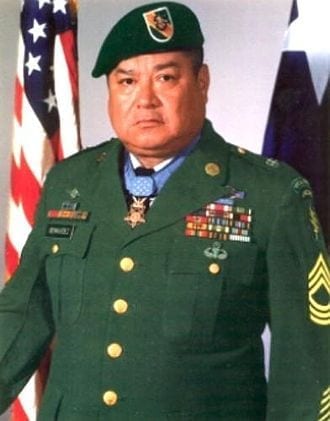
Born in Cuero, Texas, in 1935, Roy Benavidez entered the Texas Army National Guard and later active Army service. In Vietnam in 1965, he was severely injured by a land mine while serving as an adviser.1
His injuries raised the prospect that he would never walk again. During a prolonged recovery, he worked to regain movement and strength. An Army account records that he walked out of the hospital in July 1966 and returned to South Vietnam in January 1968.1
That recovery matters to the story. Before the rescue for which he became famous, Benavidez had already fought a difficult personal battle to remain a soldier.
May 2, 1968: going to the team
On May 2, 1968, Benavidez was a staff sergeant assigned to Detachment B-56, 5th Special Forces Group. A twelve-man reconnaissance team west of Loc Ninh encountered heavy enemy resistance and requested emergency extraction. Helicopters attempting to recover the team came under intense fire.2
At the forward operating base, Benavidez heard the situation developing and volunteered to accompany another extraction attempt. He jumped from a hovering helicopter and moved toward the team under fire, suffering wounds before he reached its position.2
He helped organize the defense and move casualties to an aircraft. When that helicopter crashed, he assisted survivors and continued working to make another evacuation possible. He also recovered sensitive documents, directed supporting fire, and repeatedly returned for wounded men.2
His Medal of Honor citation credits his actions with saving at least eight lives. Despite repeated wounds, he did not leave until the remaining wounded and sensitive material had been accounted for.2
Recognition and remembrance
Benavidez initially received the Distinguished Service Cross. Following additional evidence and witness corroboration, the award was upgraded to the Medal of Honor. President Ronald Reagan presented it on February 24, 1981.12
The original article also recalled how close he came to being mistaken for dead after evacuation. An Army account relates that medical personnel recognized he was alive as a body bag was about to be closed. The episode underscores the severity of his condition without diminishing the years of recovery that followed.1
Benavidez’s story is remembered for physical courage, but it is also about responsibility. He chose to go to men who needed help, and he kept returning for them when his own injuries gave him every reason to stop.
Watch: Roy Benavidez in his own words
Video link retained from the original article. Opens on YouTube.
Plei Me: a remote camp under siege
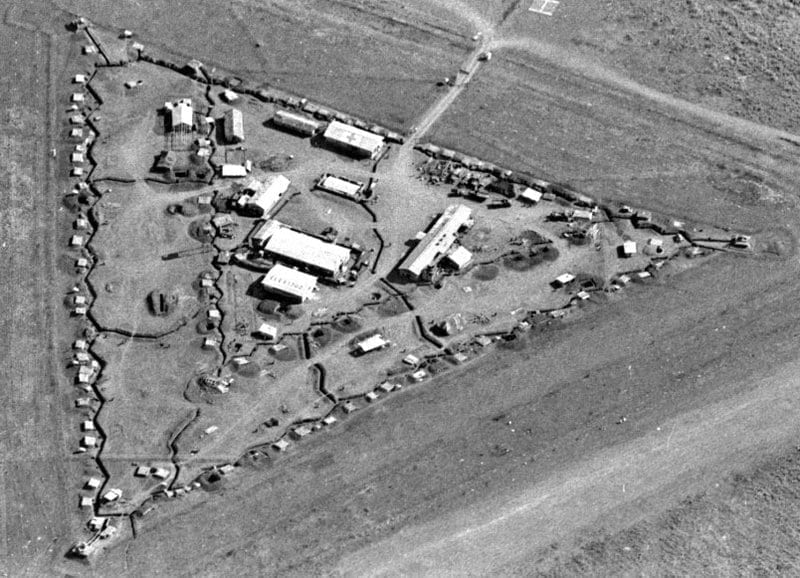
In October 1965, Plei Me, south of Pleiku in Vietnam’s Central Highlands, was a CIDG camp defended by indigenous soldiers with American Special Forces and South Vietnamese personnel. Its location made it part of the struggle for control of routes and territory in the highlands.
North Vietnamese forces began the siege on October 19. The attack threatened the camp and also sought to draw a South Vietnamese relief force into an ambush. The defenders’ problem was therefore larger than the perimeter: holding the camp and getting help through were connected parts of the same battle.3
Reinforcement, air support, and relief
Major Charles Beckwith brought reinforcements associated with Project Delta into the battle. His role in helping the besieged camp forms part of his official Special Forces regimental biography.4
Inside the perimeter, the defenders had to withstand attacks, treat casualties, maintain communications, and keep fighting while relief approached. Beyond the camp, South Vietnamese troops and American supporting forces worked to break the siege. Aviation and artillery helped connect the isolated position with the larger battle.
The relief force reached Plei Me on October 25. The siege was broken, but operations continued as American forces pursued the North Vietnamese units. The campaign led into the fighting in the Ia Drang Valley in November 1965.35
Plei Me should be remembered as a combined effort. The indigenous defenders and South Vietnamese troops were central to its survival, alongside the Americans at the camp and the aircrews and units supporting them.
What these missions leave us
Benavidez’s rescue and the defense of Plei Me show different sides of Special Forces service. One centers on a soldier who would not abandon a stricken team. The other shows an isolated camp surviving through the efforts of defenders, reinforcements, and supporting forces.
Neither story is complete if told only as an individual feat. Courage mattered, but so did training, communications, aviation, medical care, and trust between people from different backgrounds.
This concludes the six-chapter series, from the wartime roots of American special operations to the men and missions of Vietnam. The purpose has been to explain the history while remembering that its events were lived by real people, with consequences that continued long after the fighting ended.
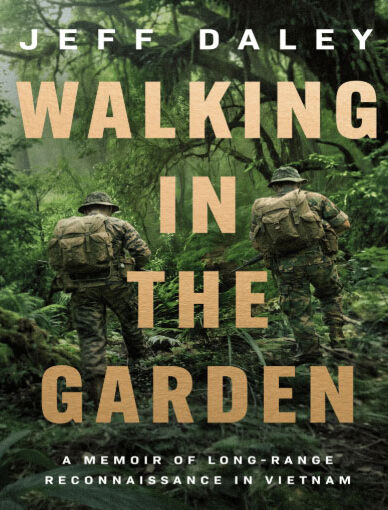
Walking in the Garden
Follow the history into a firsthand account of long-range reconnaissance in Vietnam’s Central Highlands, written by veteran Jeff Daley.
Explore the memoir Find a booksellerThe complete six-chapter series
You have reached the final chapter. Revisit an earlier chapter below.
Source
References for Chapter 6.
- U.S. Army, Benavidez Set Standard for Selfless Sacrifice.
- USASOC History Office, Roy P. Benavidez: Medal of Honor citation and service record.
- U.S. Army Center of Military History, Combat Operations: Stemming the Tide, May 1965 to October 1966, Plei Me campaign.
- U.S. Army John F. Kennedy Special Warfare Center and School, Charles A. Beckwith: Distinguished Member of the Special Forces Regiment.
- U.S. Army, Vietnam Studies: Tactical and Materiel Innovations, Chapter II, Ia Drang (archived reproduction).
- Original article, photographs, and video link: Jeff Daley, Special Forces Part 6. Plei Me photograph credited there to Stars and Stripes.