
 Jeff Daley Books
The Story Behind the Green Beret
Worn before it was officially accepted, the green beret became a lasting symbol of Special Forces—and of President Kennedy’s support.
The green beret did not begin as an Army-wide uniform decision. It began with soldiers who wanted headgear that reflected their distinctive mission. Long before it was widely recognized outside the military, it had become a source of identity within Special Forces.
Its acceptance took years. The story connects early Special Forces officers, the development of the force at Fort Bragg, and President John F. Kennedy’s interest in unconventional warfare.
An unofficial beginning
The early Special Forces use of the green beret is associated with Major Herbert Brucker, an OSS veteran, and Lieutenant Roger Pezzelle. In 1953, Pezzelle adopted it for his Operational Detachment FA32. Team members wore the beret during extended field exercises, and its use spread among Special Forces soldiers.1
The beret gave a small and still-developing organization a visible identity. Yet acceptance within a team or group was different from official authorization across the Army.
The struggle for recognition
In Germany, the 10th Special Forces Group developed its own beret traditions. Pezzelle designed the Trojan Horse badge in 1955 for wear on the unofficial beret. Local approval of that badge did not amount to Army-wide recognition of the headgear.2
The distinction matters. The green beret was already part of Special Forces life before Kennedy’s visit; the President did not invent it. His support helped settle the question of its official place in the uniform.
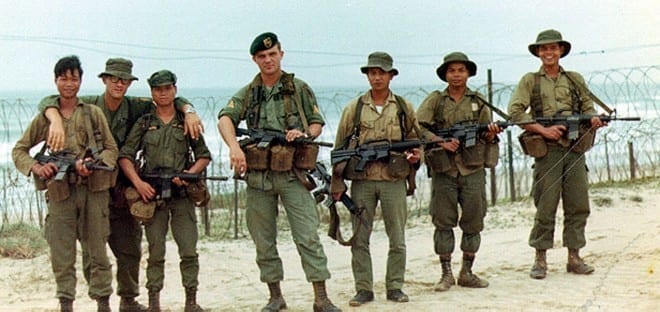
Kennedy and Yarborough at Fort Bragg
As plans developed for Kennedy’s visit to Fort Bragg, word reached Brigadier General William P. Yarborough that the President wanted to see Special Forces soldiers wearing their green berets. Kennedy believed their special mission deserved a distinguishing symbol.1
Army authorization came before the visit. The USASOC History Office timeline records a September 28, 1961, Department of the Army message authorizing the green beret as an item of uniform for all Special Forces.3
On October 12, 1961, Yarborough wore his beret while meeting Kennedy during the President’s visit. Their exchange about the headgear reflected how long its supporters had sought recognition. Kennedy’s message afterward congratulated Yarborough and expressed confidence that the beret would become a distinction in the difficult period ahead.14
The 1962 statement
Kennedy’s support continued after the visit. In his April 11, 1962, statement to the Army, he described the green beret as:
“a symbol of excellence, a badge of courage, a mark of distinction in the fight for freedom.”
The statement placed military skill within a broader challenge. Kennedy emphasized imagination, resourcefulness, and the need to combine military effort with an understanding of the people and conditions involved.5
A lasting symbol
The green beret became inseparable from the public identity of Special Forces. Its history, however, reaches beyond a distinctive item of clothing. It represents soldiers’ effort to establish their profession and the recognition that their mission required preparation different from that of conventional units.
For the men who had worn it before official acceptance, recognition confirmed an identity already built through training and service. For the public, it became a recognizable sign of that commitment.
The next chapter follows Special Forces into Vietnam, where the responsibilities behind the symbol were tested in advisory work and combat.
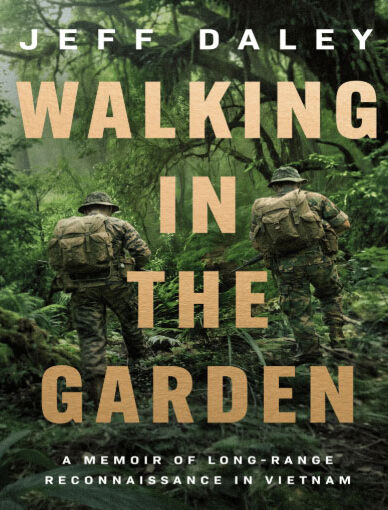
Walking in the Garden
Follow the history into a firsthand account of long-range reconnaissance in Vietnam’s Central Highlands, written by veteran Jeff Daley.
Explore the memoir Find a booksellerNext: Chapter 5 — Serving During the Vietnam War
Source
References for Chapter 4.
- Special Forces Association, Story of the Green Beret, early use and the Kennedy–Yarborough exchange.
- USASOC History Office, The Trojan Horse Badge.
- USASOC History Office, A Timeline of U.S. Army Special Operations Forces, September 28, 1961.
- U.S. Army, John F. Kennedy Special Warfare Center and School: Seventy Years and Counting, presidential visit and photographs.
- U.S. Army Airborne and Special Operations Museum, The Green Beret, including the April 11, 1962, statement; U.S. Army, The Green Berets and Kennedy.
- Original article and Vietnam photograph: Jeff Daley, Special Forces Part 4 — The Story Behind the Green Beret.