
 Jeff Daley Books
The World War II Roots of Army Special Forces
Before the Green Beret became a symbol, wartime soldiers were learning how to operate behind enemy lines, gather intelligence, and work alongside local resistance.
Small teams working far from friendly lines did not begin with the Vietnam War. During World War II, several American and Allied organizations developed ways to operate where large conventional formations could not easily go. Their missions differed, but the problems were familiar: difficult terrain, uncertain intelligence, limited supplies, and the need to trust the people beside them.
This first chapter looks at those wartime roots. It separates the formal lineage of Army Special Forces from the broader history of Army special operations, while explaining what these units contributed to the war.
More than one beginning
Modern U.S. Army Special Forces took organizational shape with the activation of the 10th Special Forces Group on June 19, 1952. Its heritage reaches further back. The First Special Service Force contributed a formal lineage, while the Office of Strategic Services and guerrilla leaders in the Philippines supplied important experience in resistance and unconventional warfare.1
“Special Forces” refers here to the Army organization associated with the Green Berets. “Special operations” is the broader field. Merrill’s Marauders and the Rangers belong in that wider history; their inclusion does not mean they were wartime Green Beret units.
The Devil’s Brigade
The First Special Service Force was activated on July 9, 1942, at Fort William Henry Harrison near Helena, Montana. This combined Canadian-American force trained for demanding operations that required physical endurance, weapons proficiency, demolitions, and movement through difficult country.2
Known as the Devil’s Brigade, it served in the Aleutian campaign and later fought in Italy and southern France. Its significance was not simply that it accepted dangerous assignments. It brought soldiers of two nations into a force capable of working together under unusual conditions. Today’s Special Forces groups trace their lineage to this organization.2
Behind the lines in Burma
In Burma, Merrill’s Marauders—the 5307th Composite Unit (Provisional)—undertook long-range operations against Japanese forces. The campaign demanded movement through jungle and mountains, with supplies carried by men and pack animals or delivered from the air. Illness and exhaustion could be as destructive as enemy fire.
On May 17, 1944, the Marauders and Chinese troops captured the airfield at Myitkyina after approaching with help from Kachin guerrillas working with OSS Detachment 101. The airfield and the town were separate objectives: the struggle for the town continued until August.3
The MARS Task Force continued the long-range penetration role in Burma. Among its soldiers was First Lieutenant Jack L. Knight of the 124th Cavalry Regiment, whose actions on February 2, 1945, earned a posthumous Medal of Honor.4 These operations helped disrupt Japanese positions and support the Allied effort to reopen an overland supply route to China.5
The Alamo Scouts
Lieutenant General Walter Krueger’s Sixth Army needed reliable information before committing larger forces. The Alamo Scouts, organized in the Southwest Pacific in late 1943, provided reconnaissance behind Japanese lines. Their value lay in getting close enough to learn what aerial observation or distant reporting could miss.6
Their best-known mission helped prepare the January 30, 1945, rescue at Cabanatuan on Luzon. Scout teams reconnoitered the prison camp and surrounding area; the 6th Ranger Battalion carried out the assault with vital assistance from Filipino guerrillas. More than 500 Allied prisoners were freed.6
The operation shows how reconnaissance supports a larger mission. Information about the objective, local knowledge, coordination, and a carefully timed assault mattered together. The Scouts’ contribution was essential, but the rescue was a combined achievement.
Guerrilla warfare in the Philippines
After the defeat of American and Filipino conventional forces, resistance continued. Russell Volckmann and Donald Blackburn avoided surrender and worked with Filipino guerrillas in northern Luzon. Wendell Fertig became a major resistance leader on Mindanao. Their organizations depended on local leadership, intelligence networks, communications, and the ability to sustain a force under occupation.7
These were not campaigns Americans conducted alone. Filipino fighters and communities supplied much of the knowledge, manpower, and support that made resistance possible. The experience helped shape later thinking about working with partner forces rather than substituting for them.
The enduring lessons
These wartime organizations helped military operations in distinct ways: they obtained intelligence, threatened enemy positions and supply lines, rescued prisoners, and organized resistance. Their greatest common contribution was demonstrating what specially selected and trained people could achieve through preparation, initiative, and cooperation.
Their histories also warn against reducing special operations to a story of daring alone. Endurance had limits. Disease mattered. Local allies mattered. A small team’s success often depended on support it could neither see nor provide for itself.
Those are useful foundations for understanding the Special Forces organization that emerged after the war—and the reconnaissance missions that followed in Vietnam.
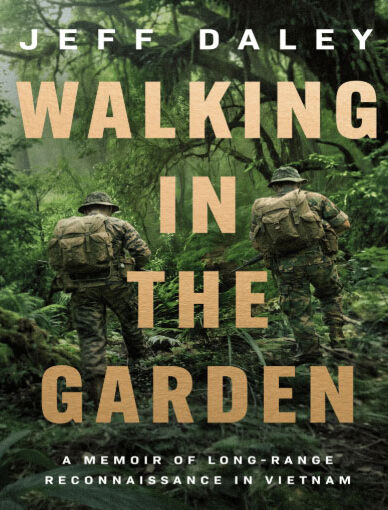
Walking in the Garden
History explains how reconnaissance developed. Jeff Daley’s memoir brings readers into his own experience of long-range reconnaissance in Vietnam’s Central Highlands.
Explore the memoir Find a booksellerNext: Chapter 2 — The Early Years
Source
This article is a historical overview. The references below provide detailed accounts and distinguish organizational lineage from the wider special operations heritage.
- U.S. Army, Becoming Special Forces; U.S. Army Special Operations History Office, A Timeline of U.S. Army Special Operations Forces.
- Army Historical Foundation, First Special Service Force; USASOC History Office, Unique Support for a Unique Unit.
- Troy J. Sacquety, USASOC History Office, Detachment 101 in the Myitkyina Campaign, Part II.
- USASOC History Office, First Lieutenant Jack L. Knight.
- U.S. Army, The Rangers of WWII.
- Michael E. Krivdo, USASOC History Office, Rescue at Cabanatuan; U.S. Army, Military Intelligence history, January 30, 1945.
- USASOC History Office, Donald D. Blackburn and the 77th Special Forces Group and Russell W. Volckmann.